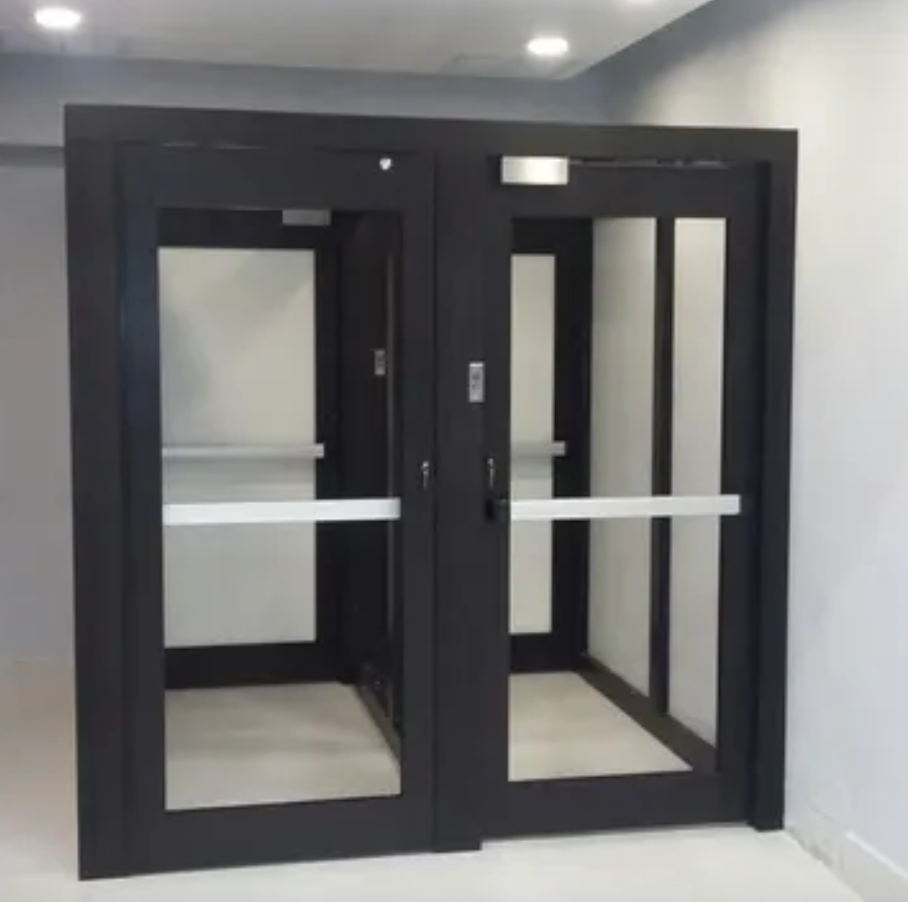
Signage is one of the most important aspects of your store's front and lobby area. They tell your clients and users where to go, what they can find in the store, and identify areas that are off-limits. In the accessibility space, signage is important because it provides clear instructions and warnings about where users may be in danger or face a potential obstacle. So, in this article, we are going to do a bit of a deep dive into how signage works in the accessibility space and what you need to pay attention to as a property manager or owner in terms of replacements and where to put them.
Why Your Signage Placement Matters
For a space to be truly accessible, you need signage that makes logical sense and is placed where someone can understand what it does and where to go. Proper sign placement helps ensure that someone with physical, visual, or mobility needs can locate, read, and interact with the space safely without needing assistance.
When placing these stickers, follow the Alberta Accessibility Design Guide standards for placement. These standards were developed with Albertans in mind and ensure your space is predictable for people with mobility and vision challenges while helping people avoid unexpected physical collisions with people, pathways, doors or walls. Placement also matters, as the ideal location should work for both seated and standing people.
Where to put signage
There are a few specifics around signage placement, and it really does depend on the door type.
Low-energy Automatic Doors
For low-energy automatic doors, the industry standard for accessible doors in Alberta, signage placement is governed by the National Building Code-Alberta and follows the strict standards set out in ANSI/BHMA A156.19. In section six, you will find the requirements that state:
- Signage instructing the user on the operation and function of the door must be visible from both sides of the door.
- Signs must be mounted 50 inches +/-12 inches from the floor to the center of the sign.
- Letters must be 5/8-inch high minimum.
- For low-energy operators, the sign must read “Caution Automatic Door” (the word “caution” is usually in the middle –>).
- Sign must be 6 inches minimum diameter, with black letters on a yellow background.
- Additional information may be included on the sign.
Per the same section, you also need signage that describes how to operate the door so someone can properly use the actuator. The specifics depend on the type of door that you have:
- For a low-energy door with a wall switch, you will need a sign that states “Activate switch to operate.”
- For a low-energy operator that starts automatically with a push or a pull, you will need a sign that says “Push to operate,” and/or “Pull to operate.”
- If you have a power-assist door, it will be similar, with a wall-mounted actuator needing to read “Easy open door – Activate switch then open door.”
- If you have a power-assist door that requires a push or a pull to start the mechanism, that sign will need to read Easy open door – Push to operate” and “Easy open door – Pull to operate.”
Automatic Doors
Like a low-energy door, automatic doors in larger commercial or retail areas also need proper signage to ensure users know what to expect when approaching the door. The signage requirements can be found in ANSI/BHMA A156.10, Section 11 and note that these doors need:
- To be equipped with signage visible from both sides reading “Automatic Door” with letters 13mm high minimum.
- If you have a foldable or breakaway door, you will also need signage noting that someone should push in an emergency.
What happens if you do not put signage up?
We've had this question a few times over the years, and the answer is that it is not worth the risk. A lack of proper signage can increase your legal liability, which is not ideal if you operate a building open to the public or a multifamily campus. In addition, missing signage can lead to safety code compliance failures, which can result in shutdowns, fines, or other serious issues with the city.
For many property owners, the signage requirements for automatic doors and low-energy doors are intense. However, they are there for a reason, and our team can help guide you through installation and ensure that your doors are fully code compliant. From replacement stickers to proper placement, Accesio is your home for accessible and affordable commercial services supporting building owners, property managers and multifamily buildings.